Showing posts with label texas. Show all posts

Friday, August 31, 2012

Gulf Coast Bird Observatory

The Gulf Coast Bird Observatory is a powerhouse of conservation, based in Lake Jackson, Texas - but with partners all over the place! This blog could almost sustain itself on their projects alone, but they do a great job keeping their site current on activities and their newsletters are just some of the highlights! Here are two snippets from their August newsletter...

The August newsletter from GCBO is just about as good as it gets - a note about the upcoming Xtreme Hummingbird Xtravaganza:
Autumn is hummingbird season in Texas, as thousands of these tiny creatures move through the state on their southward migration to Mexico and Central America. Many Ruby-throats will travel 600 miles straight across the Gulf to the Yucatan Peninsula while others will fly around the edges of the Gulf to points in Mexico. Be sure to mark your calendars for September 8th and 15th when we will host our annual Xtreme Hummingbird Xtravaganza. You can watch hummingbird banding, adopt a hummingbird, browse the Nature Store, walk the nature trails, or buy a plant to attract hummingbirds and butterflies.
Then, after an update on a land purchase grant in Costa Rica, an update on the American Oystercatcher project that we blogged earlier:
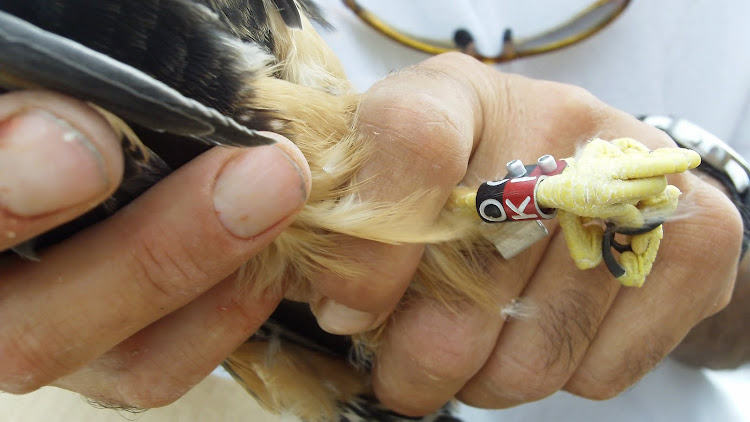
Our second field season studying American Oystercatchers was a lesson in contradictions. We again found our first nest in February and the last one in June, but that's where the similarities ended. There were fewer pairs overall so we expanded our monitoring area. We found 48 breeding pairs which produced 81 nests in Galveston and East Matagorda Bays. Bad weather hampered our monitoring attempts as well as oystercatcher productivity. Whereas last year we had no pairs attempt to nest more than twice, this year we had many pairs that attempted to nest three times only to be met with high tides that washed eggs and/or chicks away or caused starvation when the adults were unable to feed the chicks. On the Upper Texas Coast, we color-banded 54 adults and only 14 chicks. Overall productivity was approximately .21 which when compared with last year's .78 is quite a contrast. This field season marks the end of Texas State graduate student Alexandra Munters (pictured above) research on this project. She expects to graduate with a masters degree next spring and we are anxiously awaiting the results of her analysis.

This year Lianne Koczur, a graduate student from TAMUK, monitored oystercatchers on the central coast. She monitored 67 nests from 49 breeding pairs located from Matagorda Bay south to Corpus Christi Bay. Productivity on the central coast was slightly higher at .31. We have now banded 125 adult oystercatchers and 59 chicks and are looking forward to resighting data from you. If you are out birding and you see a banded oystercatcher, please check the legs for bands and let us know if you see any banded ones. We would like to thank the many volunteers that helped with this research project!

Wednesday, August 15, 2012

Texas - oystercatcher update

It's no secret - I'm a HUGE fan of the Gulf Coast Bird Observatory - they have fantastic outreach programs to familiarize the public with research (not sure if the Xtreme Hummingbird Xtravaganza has been covered on this blog before, but it needs to happen!)

There's a great effort put forth by GCBO to track American Oystercatchers along the Upper and Central Texas coast, the e-mail below is from one of the staff biologists who has made the project very approachable by folks who see any of 'their' birds. It's so refreshing to not only have the transparency of "this project exists" but also "here's where to look up more information" - it's wonderful for the curious!

Without further delay...

***

13 August 2012

TexBirders,
As many of you know, GCBO has an ongoing project studying American Oystercatchers on the Upper and Central coasts. The breeding season is over for this species now and so they will begin to wander between now and December/January when they pair up and start defending their territories again. This year we had a Texas State student working on the upper coast and a Texas A&M student working on the central coast. All told we have now banded 125 adult and 58 chick oystercatchers. Chicks can be told from full adults by having black on their bills. Chicks from last year still have a small amount of black on their bill so if you look closely you should be able to tell them apart from full adults still. I would greatly appreciate everyone checking the legs of oystercatchers that they see for bands. They are banded on each leg above the ankle (what appears to be knee) with identical maroon color bands that have two codes on them. The codes are either two numbers, two letters, or a letter and a number combination. Again, the codes on each leg are identical. These bands can be hard to see unless you look closely. I'd appreciate any sightings of banded oystercatchers be sent to me. Photos are greatly appreciated. This helps is track movements of this species during the non-breeding season and also chick movements which are very important for conservation. You can see what the bands look like and read about this project on our website here:
http://www.gcbo.org/default.aspx/MenuItemID/246/MenuGroup/Home.htm

There is also a link to a spreadsheet which has information about where each bird was banded.
Thanks everyone.
Sue
Susan A. Heath, PhD
Gulf Coast Bird Observatory
103 Hwy 332 West
Lake Jackson, TX 77566
979-480-0999
www.gcbo.org

Monday, July 30, 2012

Banded Mourning Dove

Via Les Stewart on the Texbirds facebook group:

"Had this banded Mourning Dove show up in my yard in Nacogdoches twice this week (or it could be two different banded doves). Anyway just wondering who is tagging Mourning Doves and if I should report it anywhere. I assume that would be useless, unless I shoot it and get the tag number and I wasn't planning on that..."


Wednesday, July 25, 2012

N 1 - Texas City Oystercatcher

The more we know... well, the more we know!

"American Oystercatcher 'N 1,' Haematopus palliatus, at the Texas City dike, 26 July 2012. This bird was tagged at the Nature Conservancy's Texas City Prairie Preserve, up the coast a bit. Its mate has a broken wing and is in rehab, so 'N 1' may have left to search for a new mate."

Click here for the photo.

Tuesday, July 10, 2012

Banded White-winged Dove in TX

White-winged Dove in a residential area in Victoria, TX (kind of the central coast - ish), likely part of a population study; via Texas Nature Notes!

Wednesday, June 27, 2012

Texas Black-necked Stilts

Anahuac NWR, on the Upper Texas Coast, is my old stomping ground... and now there are almost 200 banded Black-necked Stilts roaming around! Wish I were down there.
 
****
 
Texbirders,
 
Anahuac has been slow but steady through June. Shorebirds have returned, with up to 17 species seen (18 Jun).
 
Highlights include:
 
bronzed cowbird (male) continues by entrance
tropical kingbird, 20 June
red knot on Alice, Jackson, White (closed unit west of Shoveler Pond), 23 June, undergoing extreme wing molt, will post photo to TOS list when have access to my computer.
wood storks (up to 350 on Alice, Jackson, White), viewable at a distance from west side of Shoveler Pond
American avocets (up to 500)
stilt sandpiper, 20 June (early or late?)
 
In addition, ~175 black-necked stilts have been color-banded on Anahuac over the last two years, and capture efforts continue, 250-300 will have been banded by the end of July, please check stilt legs for bands as we have experienced minimal resightings (Thanks Joe Kennedy!). Much of this is due to a large stilt population (>25,000) along the upper coast and inaccessible habitat, but I feel that some of this is just due to people being unaware of our banding operation, please tell others! Many of our radio-marked birds have disappeared to parts unknown/off-refuge. Would greatly appreciate assistance relocating these individuals.
 
Thanks,
 
Thomas Riecke
Chambers County, Texas

Monday, May 14, 2012

Sometimes they get away...

Over the weekend, a banded Western Scrub Jay was seen - without camera or binoculars - with a silver leg band (observer does not recall which leg) at the L.E. Woods picnic area in the Davis Mts. Sightings like this are a bit frustrating because it takes a lot of asking - and asking who to ask - to find out about the bird. And you'll never know the individual's story, beyond a banding. So, to keep asking...

Curious!

Tuesday, March 13, 2012

Look for banded Golden-cheeked Warblers!

From a Texbirds post, re: a banded Golden-cheeked Warbler photographed by Sean Paul Kelly (click here for the photos) "This bird is part of the Balcones Canyonlands Preserve Golden-cheeked Warbler study that is now going on. This bird was banded last year on April 20th at Emma Long Park."

Subject: banded Golden-cheeked Warblers

From: Bill Reiner (spizella/AT/SBCGLOBAL/./NET)
Date: Mon, 12 Mar 2012 20:45:18 -0700

TexBirders,

I had a feeling I needed to send out this message pronto, and it seems I am one day late. But thanks to Mr. Kelley, for asking the question, and for posting those photos of the banded Golden-cheeked Warbler in Emma Long Park this morning! (And also thanks to the quick-responding TexBirders who alerted me to his post.)

The bird Mr. Kelley photographed is one of more than 350 Golden-cheeked Warblers that have been banded by biologists on study plots scattered across the Balcones Canyonlands Preserve, on the west side of Austin, over the past three years. The vast majority of the banded birds have been males, but a few females have also been banded. Biologists at Fort Hood have banded even more individuals of this species, over an even longer time. The goals of the studies in these two locations have included learning more about the survival rates, age ratios, and dispersal of these endangered birds.

Some of the plots where Golden-cheeks have been banded around Austin are in areas open to the public, such as Emma Long Park (Turkey Creek Trail), Barton Creek Greenbelt (Sculpture Falls area), Saint Edwards Park, and, for the first time last year, Wild Basin. However, the birds returning from their winter ranges could turn up anywhere (even South Padre Island!), so please look closely at the legs of any Golden-cheeked Warbler you spot. A banded warbler will have one numbered aluminum band (don’t even try to read it with binoculars) and two or three colored resin or plastic bands to allow for recognition of individuals in the field. If you do see a banded Golden-cheeked Warbler, I will be very happy to hear about it, and can direct the information to the biologists -- either at Fort Hood or here in Austin -- who banded it. The best place to contact me is: william.reiner AT austintexas.gov

Information to provide:
1) What color bands in what order. Banders read bands as: upper left leg/lower left leg : upper right leg/lower right leg. So, for example, Mr. Kelley's bird is red/orange : white/silver. Colors are not always what they appear at first glance, so a photograph is always welcome, if it's possible. Colors can often be misread. Legs can be mixed up -- it's the bird's left and right legs, not which is right or left as you are looking at it. Even upper and lower can be confused depending upon your vantage point. Because of the potential for confusion, it is also very important to give us...

2) The location of the bird. A GPS position would be very helpful to pinpoint its location, but if this is not possible, landmarks along a trail or road or other feature can greatly help us to relocate the individual and verify its identity.

If you want to help even more with this project, please come volunteer with us!

The BCP biologists cannot possibly watch all the suitable habitat on the Preserve, so we are seeking experienced birders willing to devote at least 3 field days this spring to searching for banded warblers. Volunteers will have the opportunity to explore a part of the Balcones Canyonlands Preserve that is not normally open to the public. Several birders are already trained and ready to go this spring, but, because we banded birds on new plots last year, we still need people to look for returning birds on the outskirts of those plots. If you have the time and the interest, please contact me at the e-mail address above.

Thank you,
Bill Reiner, field biologist
Balcones Canyonlands Preserve
City of Austin
(512) 972-1676

Friday, February 24, 2012

Mexican Jay, Big Bend National Park


(Photo via Mark Flippo of Birding Big Bend)

"A Mexican Jay near the Pinnacles campsites in the Chisos: note the silver band on the bird's left leg. In 1996-97 a graduate student came to BBNP to conduct research on Mexican jays and banded a number of birds, including some hatch year birds. Either he never completed his work or he didn't publish so there is no record of study results but an indirect benefit was the bands provided a datapoint... those few jays still flying aorund in the Chisos with bands on their legs are at least 15 years old. This jay is definitely a viejo..."

Photo and caption originally posted at Birding Big Bend's facebook page, thanks to Kym Flippo!

(Crossposted at Big Bend Birds & Nature)

Thursday, December 22, 2011

Hummingbird in the hand...

Original post from Big Bend Birds & Nature.

This bird was not found banded but the process is too interesting to resist posting here!

***

Allen's Hummingbird (Selasphorus sasin) vs. Rufous Hummingbird (Selasphorus rufus)

Most Rufous Hummingbirds have at least some green flecks on their backs at some point of growing up. Some lose them by the time of adulthood. Some keep or gain more into a "green-backed" Rufous Hummingbird status.

It's this green-backed Rufous Hummingbird that is near identical to the adult Allen's Hummingbird, a bird that always has a green back.

Where ranges overlap, it can be difficult or impossible to separate the two other than having the bird in-the-hand. As time marches on, there are those who are learned enough in their bird observing, field-work and/or region they live in that can tell the difference between the two without it in-hand. Others atleast have experienced leanings toward one species ID or another. The advent of high-shutter speed digital photography has helped, too.

There was an effort today to capture two green-backed Selasphorus species hummingbird.

We caught one. One person in the party is long-timed permitted to do this.

Allen's Hummingbird , Marathon, Brewster Co., TX. A location where migration routes do overlap.

Some diagnostics:

One way out of the hand to get a strong hunch is this:


Hatch-year (HY), birds hatched this calender year (have a mixed audience reading), Allen's Hummingbird male develop their full gorget earlier than do Rufous.

This HY male Allen's is well on his way.

By the way, HY hummingbirds have corrugations or wrinkles/grooves running alongside their bills. After-HY birds typically lack them completely or they are almost gone.


That's what Kelly is looking at in the above pic.

This HY bird (and us for that matter) is all the way into the month of December. It's lost some its older feathers, though has some left.

Check out the primary feathers of one of his wings:

It has new secondary feathers. It also has new primary feathers except for the outer-most 3 (P7-9). More brown in color and certainly more worn on the edges. He's growing up.

Also, his tail still has some old pin feathers amidst newer adult tailfeathers.


Moving from age-characteristics of humming birds back to species specific characteristics making this an Allen's Hummingbird, and not a green-backed Rufous Hummingbird...

These two species have 10 tail-feathers or retrices. There are five on the left and five on the right. The innermost are both labeled tailfeather number 1 (or R1). So from the innermost two tail-feathers, our R-1's, we count outward; R-2, R-3, R-4, R-5.

In the above photo, those two thickest feathers by his index finger are the R-1 tail-feathers.

R-2 feathers on a Rufous Hummingbird has a notch in it.

R-2 feathers on an Allen's does not.
No notch here.

All the tail-feathers in each sex and age-class are narrower in Allen's compared to Rufous.

This become more acutely apparent in R-5. The outermost tail feathers. They are narrower in Allen's Hummingbirds.


Again, no notch in R-2, and check out the narrower outermost tail-feathers. Somewhere we can dig up a photo of the tail of both species side-by-side. I'll edit that in, in the future, perhaps.


Anyways, as is standard procedure in avian fieldword various physical measures were taken.

This is wing chord length:

Chord length is a measurement taken when a bird's wing is bent at around a 90 degree angle (sort of as if it were at rest). The length from the "wrist" to the longest primary wing tip is taken.
Check out his new band on his right leg. Tiny.
I've worked with band sizes from albatross, sulids, shearwaters, noddies, terns, warblers, vireos, shrikes, and others. The band size for a hummingbird is amazing!

Measuring tail length:


Width of the outer tail feather:


After various other morphological data taken, this HY male Allen's Hummingbird with a healthy weight was released ... with a bad auto-focus..


Another far-West Texas Allen's Hummingbird. This is the latest calender date that Kelly has banded an Allen's. Kelly's been doing this for a long time. (Edit: click here for his site and research on West Texas Hummingbirds!)

**He later banded an Allen's Hummingbird this afternoon at a friend's place in Alpine.

Saturday, June 25, 2011

Black-necked Stilts at Anahuac NWR

This was a post on the Texbirds listserv recently; a spot close to my heart and a species that makes black & white look exotic!

***

Subject: Color-banded black-necked stilts and noteworthy sightings at Anahuac

From: Thomas Riecke (riecket13/Y)
Date: Fri, 24 Jun 2011 15:49:00

Dear Texbirders,

We have started color-banding black-necked stilts on the refuge. Band combos will be orange over aluminum over blue/red/or green (male/female/hatch year)on the right leg, and a unique combination of three color-bands on the left leg. We expect to band several hundred birds this summer and early fall. I would greatly appreciate any observers who resight marked individuals to report them by phone AT (214) 384-8085 or by email at riecket AT titan.sfasu.edu. Phone is preferred as internet access is spotty in the field. GPS coordinates would be amazing, but even a general description of the location will be more than acceptable.

In other news, Kelli Haskett and I had black rail along Frozen Point Rd. (at
the 90 degree left hand before the long straightaway that leads to the kayak
launch on the bay) while conducting frog surveys early Thursday morning, and
Steve McDowell and I had a pair of least grebes are nest-building on one of the
moist soil units on the East Unit (closed to the public).

Thomas

Monday, May 30, 2011

Piping Plovers!

This quick exchange was sent to me (by request); I've shuffled the order so it's in chronological order and a bit easier to read. What a fast response, even if official location is still pending!


> Sent: Tuesday, April 26, 2011 8:15 PM
> Subject: Banded Piping Plovers
>
> http://www.pbase.com/lgprice/texas_central_coast
>
> I observed several Piping Plovers today on Mustang Island, TX, USA just south of Mustang Island State Park at Corpus Christi Pass.
>
> There were at least two banded Piping Plovers.
>
> I put photos of the birds in the above album. There are several photos of each bird.
>
> They were foraging on the wet sand spits.
>
> Linda Gail Price
> Longview, Texas
> Pineywoods


> Date: April 26, 2011 10:40:01 PM CDT
> Subject: RE: Banded Piping Plovers
>
> Linda- Much appreciated!
>
> It looks as if they have dark green flags (colour bands that stick out for the leg) as well as normal colour bands, so they will have been banded by Virginia Tech in Texas or along the Missouri River, SD. I've forwarded your message to them - they should be able to get back to you with more information about the birds.
>
> Thanks for sending them in!
>
> Cheri
>
> Dr. C. L. Gratto-Trevor
> Research Scientist Shorebirds
> Prairie and Northern Wildlife Research Centre
> Wildlife and Landscape Science Directorate
> Science and Technology Branch
> Environment Canada
> 115 Perimeter Road
> Saskatoon, SK S7N 0X4 Canada
> cheri.gratto-trevor@ec.gc.ca
> Telephone 306-975-6128
> Facsimile 306-975-4089
> Government of Canada

Wednesday, November 10, 2010

Hummingbird banding

...in November! (original link here)

Today, Wednesday, we hosted bander Kelly Bryan (of West Texas Hummingbirds) who was assisted by Carolyn Ohl of the Christmas Mountains Oasis. At 9 AM the trap was set up and within 10 minutes, the female Anna's was in hand. Before the end of the hour, the latest documented Black-chinned Hummingbird (also female) was banded and on its way!

From Kelly's e-mail prior to the banding:

There are no records beyond Oct 29 for Black-chinned and Oct 31 for Ruby-throats; however I do have two winter records for Ruby-throat (Dec for one and Jan through April for the other). ... So far I have banded 58 Anna's this fall and the last BCHU was Oct 17 and the last RTHU was Oct 4.

For those unfamiliar with banding code:
BCHU = Black-chinned Hummingbird
RTHU = Ruby-throated Hummingbird

So it goes without saying that we're thrilled to be a part of Kelly's banding research. We're even more excited that we didn't lure him all the way out here and not have a decent record for him. November 10 and two species of hummers... not so bad, eh?


...captions and further explanations will be added after a supply run and a few loads of laundry and maybe another coat of paint. Our apologies!

Wednesday, November 3, 2010

Egrets among us

Occasionally there will be a post on Texbirds (the Texas bird sighting list) about a bird with a band or tag or dye. Recently the bird in question was a white morph of the Reddish Egret.

The fellow in charge of the project, Clay Green, was fairly quickly found and kindly gave permission to post about his project here. To visit his site, click here - waterbird colony research awaits!

Because the bird is so young, there's not much data on it:
I dont know much more about the bird but it has been foraging along Texas coast since it fledged the nest in July. We have been tracking it regularly, we get latitude-longtidue fixes every 48 hours... Attached is a jpeg map of the bird's movement, we just banded it in June so it hasn't moved that much, but you can see at least where it has been going...

So this young one hatched in June of 2010, was banded in July, and this map shows through the middle of September:


With those dots representing 48 hr intervals, the huge gaps are distances covered in only two days. Dot clusters then show places that the bird loitered for extended amounts of time. I wonder if it will return to the rookery where it hatched to breed?

Friday, October 15, 2010

Knots in the news

The Western Hemisphere Shorebird Reserve Network has a fantastic reference page, mentioned in the previous post, Birding for Banded Shorebirds - it's worth printing out and keeping a copy on hand if you bird coastal areas much.

So when I came across another note on banded shorebirds, I had to share that link again before adding an article about Red Knots (Calidris canutus) from the Corpus Christi area.

Bag 'em, flag 'em and tag 'em
Coastal Bend bird biologist tracking red knots

Keep your eyes open! Red Knots are seriously declining and research like this is helping track the populations as they migrate globally.

Saturday, September 18, 2010

Yellow-crowned Night Herons

I am absolutely enthralled with the idea of banding all rehab birds. It's not common by any means but a group in Houston, WR&E, participates when it comes to Yellow-crowned Night Herons. They're a fantastic species to observe hunting, and they often congregate in populated areas along the coast (many wading birds prefer undisturbed habitats) so they're ideal for a project like banding.

Without further delay: Ongoing Research from Wildlife Rehab & Education

Tuesday, August 3, 2010

Aplomado Falcons

For all of July, August and half of September, I'm in west Texas - the project? Releasing young Northern Aplomado Falcons into the wild for The Peregrine Fund.

To read up on the project, check out "Aplomado Falcon Updates" from TPF. Or, for all of the Aplomado tagged posts at See Trail, click here.

Hopefully I'll have some exciting things to post at the end of the season, but until then, we're keeping busy!

Friday, June 18, 2010

Curlews on the move

Recently there has been some curlew migration discussion on the Texbirds mailing list. Never one to let something cool slip by me, I e-mailed Joel about the project.

Nebraska Long-billed Curlew Tracking Project is following two female Long-Billed Curlews (Numenius americanus) - the site is amazing. One has not been heard from since December, but the other has made an early fall migration; she left the wintering grounds in April, and is almost back on them already and it's only mid June!

"Feel free to blog about the project and the website. It is a fun part of the curlew project and I think people find it interesting."

...Joel's suggestion that this study is interesting is an understatement. Take a look at Long-billed Curlew life history. First of all, it's a sandy colored bird about the size of a football. On stilts. With a long neck. And a beak that is longer than its legs. The curlew tracking project takes this fantastically proportioned bird and then adds a telemetry pack. The fine print also lists their life expectancy of 8-10 years.

Joel also offered some reassurance to my question of whether or not the transmitter interfered with mating: "I do not believe the satellite transmitter interfere with mating, other than the small battery, the rest of the transmitter is flexible."

And now for a paragraph of sage advice, and part of the wisdom behind all bird tracking (emphasis mine):
Why Track Long-billed Curlews?

Long-billed Curlew are migratory shorebirds that spend only a quarter or a third of their annual cycle on their Nebraska breeding grounds. While understanding Long-billed Curlew reproductive ecology in Nebraska is important and is part of the broader project, knowing where Nebraska curlews spend the rest of the year is equally important. For instance, the species' habitat and food resources may be secure in Nebraska, but curlews may face threats on their wintering grounds in Texas, California, or Mexico (we don't know for sure where Nebraska curlews go?). Linking birds breeding grounds with their wintering areas and migrations routes is key to conserving the species.


And so we end on a note of conservation: as guests on this planet, we need to make sure that what we do is not at the expense of others. Birds know no borders.

Tuesday, March 9, 2010

Travels of a Peregrine

Wildlife Rehabilitation and Education recently posted an entry: The Stories They Could Tell. It's a wonderfully informative blog, this post is of particular interest because it actually tracks a male Peregrine Falcon who had been banded as a wee fledgie in 2007 and ended up in Houston with my "old" rehabber.

Saturday, February 27, 2010

the inspiration

Be sure to check out the "Welcome" page - it has information on how to report banded and tagged birds! Otherwise, discussion and history is fair game.


Here are a few stories of reports past, ones that inspired us to collect information and share with other curious minds:

A Dove and a Pelican from Big Country Audubon (TX)

eagles with accessories and Camp Eagle from Seetrail (FL)

Edit: "eagles with accessories" has been reposted in this blog as "Eagles and bands and collars, oh my!"

Appleton to Alamo; 1,482 miles by pelican & Jeff and pelicans from Seetrail (TX)